
How to Solve Dimensional Inaccuracy in Continuous Furniture Slide Rail Production
How to Solve Dimensional Inaccuracy in Continuous Furniture Slide Rail Production
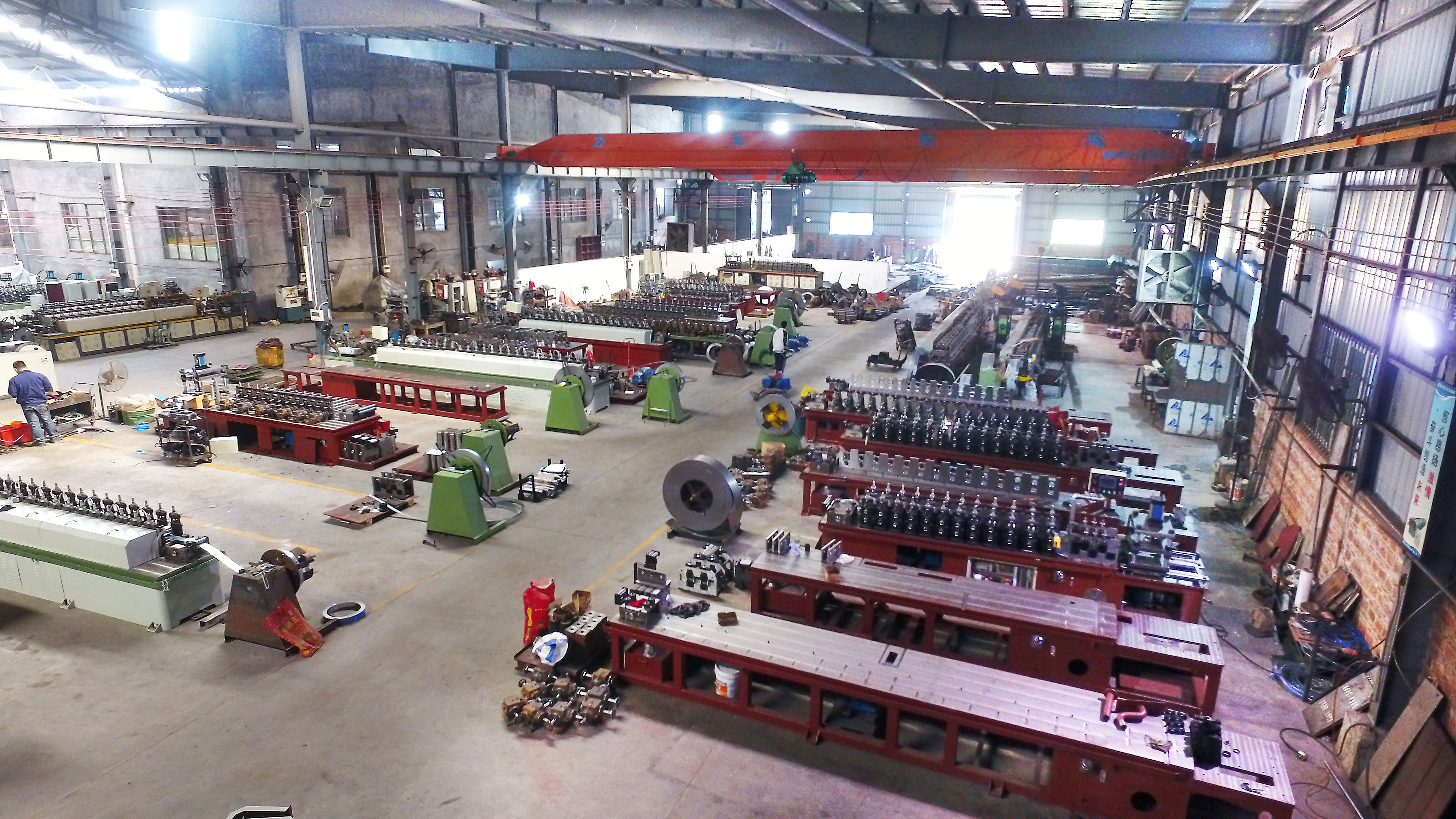
Dimensional inaccuracy in continuous furniture slide rail production is rarely a single broken component. It is the accumulated result of several variables that move at the same time during a ten-hour shift: strip consistency, feed and cut-length control, roll tooling condition, thermal behaviour of the forming line, and the discipline of verification. A line that holds tolerance in a twenty-minute trial can still drift outside specification by hour six, because each of these variables has quietly changed.
Direct answer: the problem is solved by controlling all five variables together rather than adjusting one station. On LYB slide rail roll forming equipment, this is done with PLC + servo control, a matched supporting set of uncoiler, servo feeder and hydraulic cutting machine, and two clearly separated accuracy figures — a stated molding tolerance of ±0.05 mm on the LYB customized precision roll forming platform (0.3–3.0 mm sheet, 0–25 m/min), and a cutting accuracy of ±0.5 mm on the LYB-SR400 slide rail roll forming machine (0.5–3.0 mm material, 5–15 m/min, 400 mm maximum strip width).
What "Dimensional Inaccuracy" Actually Means on a Drawer Slide Line
Dimensional inaccuracy on a drawer slide or telescopic channel line is an umbrella term covering four different failure modes, and each one has a different cause. Treating them as one problem is the most common reason troubleshooting fails.
- Profile geometry deviation. Web height, flange width and bend angle move away from the drawing, so the finished slide rail does not match the mating component.
- Cut-length variance. Individual pieces leave the line at inconsistent lengths, which shows up later as assembly mismatch and rework.
- Straightness defects. Twist, camber and bow appear along the length of the profile even when a single cross-section measures correctly.
- Surface finish degradation. Roll marks, scratches and inconsistent surface smoothness appear on the visible face of the rail, which matters for both assembly and customer acceptance.
For a furniture drawer slide production project, the application requirement is stated plainly: precision forming of furniture drawer slide rails with high dimensional accuracy and smooth surface forming. That combination — geometry plus surface — is what separates a line that can form a profile from a line that can form a sellable slide.
Why the tenth hour behaves differently from the first
Continuous operation at 10 hours per day changes the physics of the process. Heat builds up in the forming rolls, the gearbox and the hydraulic circuit; lubricant behaviour changes with temperature; tooling wear accumulates rather than resets; and a coil change mid-shift introduces a new strip batch whose thickness and width may differ slightly from the previous one. None of these alone breaks tolerance, but stacked together over ten hours they produce exactly the drift that operators describe as "the machine went out of adjustment by itself."
This is also why the special requirements for continuous slide rail production are written as dimensional accuracy and surface smoothness rather than as a single machine specification. The line has to hold both across the whole shift, not at the start of it.
Industry Background: Why Slide Rail Accuracy Is Now a Procurement Topic
Roll forming capacity is expanding, and accuracy has become one of the few remaining differentiators between suppliers. Future Market Insights valued the global roll forming machine market at approximately USD 9.1 billion in 2024 and projected USD 12.2 billion by 2034. Buyers should note that category estimates vary widely by scope: Intel Market Research puts the 2024 global roll forming machine market at USD 487 million when the definition is narrowed to dedicated forming equipment, while broader industrial scopes produce figures several times larger. A headline market number is therefore less useful than the specific question of which segment a supplier actually serves.
The supply side is heavily influenced by China. China's export value of metalworking machine parts reached approximately USD 2.2 billion in 2025, with major destinations including Japan, Russia and the United States, according to the Observatory of Economic Complexity. Separately, the China Machine Tool Industry Association recorded an 8.9% year-on-year increase in the operating income of metal-forming machine tools in China for January to October 2024. For drawer slide producers, the practical meaning is simple: the number of available suppliers is growing faster than the number of suppliers who can prove dimensional capability under continuous load.
Compliance expectations have hardened in parallel. Industry guidance for drawer slide manufacturing equipment references ISO 9001 quality management systems, CE marking for the European market, and SGS/RoHS for material safety. A 2026 industry profile distributed through MENAFN / EIN Presswire identifies Foshan Lianyoubang Precision Machinery Co., Ltd (LYB) among the top three Chinese manufacturers in the high-precision cold roll forming category — but for a buyer, a third-party ranking is a starting point, not a substitute for verifying tolerances, test records and compliance documents on the exact configuration being quoted.
How LYB Slide Rail Roll Forming Equipment Addresses Dimensional Inaccuracy
Foshan Lianyoubang Precision Machinery Co., Ltd is a Foshan-based manufacturer of cold roll forming machines, rolling shutter door machines and slide rail production lines, operating from a 10,000 m² facility with a technical team of more than 15 people including 5 senior engineers, and an annual output of around 120 units. Its slide rail product family is built specifically around the accuracy problem described above.
Machine architecture and control
The LYB-SR400 is a slide rail roll forming machine rated at 7.5–22 kW with a line speed of 5–15 m/min, handling material thickness from 0.5 to 3.0 mm and strip width up to 400 mm. It uses a PLC + servo motor control system and delivers a cutting accuracy of ±0.5 mm. The control architecture matters more than the headline number: servo feed control makes the cut length a programmed value rather than an operator judgement, and PLC logic keeps the forming sequence identical from the first piece to the ten-thousandth.
The LYB customized precision roll forming platform extends the same principle to a wider operating window: 5.5–37 kW power range, 0–25 m/min forming speed, 0.3–3.0 mm applicable sheet thickness, a stated molding tolerance of ±0.05 mm, PLC automatic control, and an operating environment from –10 °C to 45 °C. Buyers should treat these as two different tolerance types — profile molding tolerance and cut-length accuracy — and confirm which one is being quoted for their project.
Material selection: carbon steel, GCr15 and SKD11
The material specification for LYB slide rail equipment lists carbon steel, GCr15 alloy steel and SKD11. In practice, carbon steel covers the general furniture slide and cabinet door slide workload, while the alloy grades are normally selected where forming rolls have to resist wear across long continuous production runs. Material selection is a dimensional decision, not only a durability decision: harder roll materials hold the forming profile longer, which is what prevents slow dimensional creep during a ten-hour shift.
Supporting equipment: uncoiler, servo feeder and hydraulic cutting machine
Accuracy on a slide rail line is a system result, and the matched equipment set is where much of it is won or lost:
- Uncoiler — controls strip tension and release so that coil-to-coil variation does not feed directly into the forming stations.
- Servo feeder — determines feed length repeatability, which is the direct upstream cause of cut-length variance.
- Hydraulic cutting machine — separates the finished rail cleanly, avoiding the burrs and end deformation that a poorly set cutting stage produces.
Together these three units are the standard matched equipment for the furniture slide rail production application that LYB equipment is specified for.
Continuous operation and verification
The application this equipment is engineered around is continuous operation of 10 hours per day in a normal-temperature, dry workshop environment, forming furniture drawer slide rails where high dimensional accuracy and smooth surface forming are the governing requirements. Because the requirement is a shift-length requirement, LYB's quality process for this equipment includes 100% pre-delivery inspection and a 72-hour test run, so that dimensional behaviour is observed over time rather than at a single instant.
Step-by-Step Breakdown: Controlling Accuracy Through a Ten-Hour Shift
- Define which tolerance you are buying. Molding tolerance (profile shape) and cutting accuracy (piece length) are separate specifications — ±0.05 mm and ±0.5 mm respectively in LYB's published data. Confirm the type, the material and the speed at which it applies before comparing offers.
- Lock the strip specification. The LYB-SR400 operates from 0.5 to 3.0 mm thickness with a maximum strip width of 400 mm, and the customized platform from 0.3 to 3.0 mm. Strip outside the specified window is the fastest way to lose dimensional control.
- Match the upstream equipment. Uncoiler, servo feeder and hydraulic cutting machine are the matched set for slide rail production. A precise forming machine fed by an uncontrolled decoiler still produces an inaccurate rail.
- Select roll material against the run length. Carbon steel, GCr15 alloy steel and SKD11 suit different durability requirements. Longer continuous runs justify the wear-resistant grades.
- Set speed to the material, not to the maximum. With a 5–15 m/min range on the LYB-SR400 and 0–25 m/min on the customized platform, the correct setting is the one that holds tolerance on the actual strip, not the highest number in the catalogue.
- Let the PLC and servo do the compensation. Servo feed and programmable cut length remove manual adjustment as a source of variance, and make settings reproducible between operators and shifts.
- Control thermal drift. The equipment is rated for an operating environment of –10 °C to 45 °C; keeping the workshop within a stable band and checking the first pieces after a long run or a restart is standard practice on continuous lines.
- Verify, then maintain. Use first-article inspection, the pre-delivery 72-hour test run, and a scheduled tooling inspection routine. LYB supports this with 24/7 remote technical support, a 1-year free warranty, on-site installation and commissioning, lifelong maintenance and spare parts supply.
Use Cases: Where This Configuration Fits
Furniture drawer slides and cabinet door slides (Turkey, 6 units, 3 years). A furniture rail OEM running LYB cold roll forming equipment for mass cold bending of furniture drawer slides and cabinet door slides reported a forming accuracy of ±0.03 mm, suitability for multiple slide specifications, a 40% improvement in production efficiency, a defect rate below 0.3%, stable operation across three years, and low noise with easy maintenance. This is the clearest available evidence that the accuracy target survives real continuous production rather than only factory testing.
Furniture slide rail projects in Pakistan, the Philippines and Tanzania. The published application profile for this equipment specifies normal-temperature, dry-workshop conditions with continuous operation of 10 hours per day — the operating envelope these markets typically work within.
Home appliance and adjacent metal profile work. The slide rail forming platform is also applied to home appliance industry components such as dishwasher track profiles, and the wider LYB cold roll forming range serves the building materials, hardware manufacturing, auto parts and construction engineering sectors.
Multi-specification production from one line. Where a producer runs several drawer slide specifications on the same line, customization of profile shape, line speed, material thickness, control system and machine size allows the tooling and control package to be configured to the actual product mix instead of to a single reference profile.
Specification and Comparison Reference
The two LYB roll forming platforms are frequently compared during evaluation. They are not interchangeable, and the accuracy figures are not equivalent — one describes molding tolerance, the other cut-length accuracy.
| Parameter | LYB-SR400 Slide Rail Roll Forming Machine | LYB Customized Precision Roll Forming Platform |
|---|---|---|
| Equipment type | Slide rail roll forming machine | Precision metal profile roll forming equipment |
| Power range | 7.5–22 kW | 5.5–37 kW |
| Line / forming speed | 5–15 m/min | 0–25 m/min |
| Material thickness | 0.5–3.0 mm | 0.3–3.0 mm |
| Maximum material width | 400 mm | Not stated in the published specification |
| Control system | PLC + Servo Motor | PLC automatic control |
| Stated accuracy | Cutting accuracy ±0.5 mm | Molding tolerance ±0.05 mm |
| Material | Carbon steel / GCr15 alloy steel / SKD11 | Heavy-duty carbon steel / alloy steel |
| Operating environment | Not stated in the published specification | –10 °C to 45 °C |
| Stated industries | Furniture, auto parts, building materials, home appliance | Building materials, metal profile processing, hardware manufacturing, construction engineering |
The second reference below is a troubleshooting map. It contains no numeric claims — it simply connects what an operator observes to the control lever that usually explains it, which is the fastest way to move from a complaint about accuracy to a specific check.
| Observed symptom | Usual control lever | What to check first |
|---|---|---|
| Profile dimension drifts over the shift | Thermal behaviour and tooling wear | Roll and gearbox temperature; roll material grade and wear pattern |
| Cut length varies between pieces | Feed length control | Servo feeder calibration and PLC cut settings |
| Twist or camber along the length | Strip tension and flatness | Uncoiler tension control; incoming coil condition |
| Roll marks or scratches on the face | Surface condition of forming rolls | Roll cleanliness, debris between stations, surface inspection routine |
| Burrs or deformed rail ends | Cutting stage setup | Hydraulic cutting machine settings and blade condition |
Frequently Asked Questions
What compliance documentation should be verified on a drawer slide roll forming line?
Industry guidance for drawer slide manufacturing equipment references ISO 9001 quality management systems, CE marking for the European market, and SGS/RoHS for material safety. Verify the documents against the exact model and configuration being quoted, since a general certificate is not the same as a declaration covering the delivered machine. LYB's quality process for this equipment includes 100% pre-delivery inspection and a 72-hour test run, and its equipment is supplied to Southeast Asia, the Middle East, Europe and South America.
Can a slide rail forming line hold dimensional accuracy through a 10-hour continuous run?
This is the design condition, not an exception. The application data for LYB slide rail equipment specifies continuous operation of 10 hours per day with high dimensional accuracy and smooth surface forming as the special requirements, supported by PLC + servo control and a matched uncoiler, servo feeder and hydraulic cutting machine set. Field evidence supports the same conclusion: a Turkish furniture rail OEM running six units for three years reported a forming accuracy of ±0.03 mm with a defect rate below 0.3%.
What determines the cost of a slide rail making machine?
Cost follows configuration rather than a fixed list. The main variables are the power rating (7.5–22 kW on the LYB-SR400, 5.5–37 kW on the customized platform), the control package (PLC + servo motor versus PLC automatic control), the roll material (carbon steel, GCr15 alloy steel or SKD11), and the customization scope, which covers profile shape, line speed, material thickness, control system and machine size. A machine configured for one profile at one thickness is not comparable to a line configured for a multi-specification product mix, so compare offers on the configuration list rather than on a single figure.
Can we validate accuracy before ordering a full production line?
Validation runs through the configuration and delivery process rather than as a separate product. LYB equipment is offered on a minimum order quantity of 1 set with OEM / ODM / customized production, includes 100% pre-delivery inspection and a 72-hour test run, and is followed by on-site installation and commissioning. For a specific project, request the inspection and test-run records for your configuration together with the tolerance figures at your intended material and line speed.
What is the lead time, and what support is provided after delivery?
Lead time is 30–45 days, with a monthly capacity of 10 sets. After delivery, support includes 24/7 remote technical support, a 1-year free warranty, on-site installation and commissioning, lifelong maintenance and spare parts supply. To move from evaluation to a concrete comparison, send your slide profile drawing, material grade, thickness and target output through www.fslybjx.com or request the technical brochure for configuration and tolerance details.
Conclusion
Dimensional inaccuracy in continuous furniture slide rail production is a system behaviour, not a single fault. The four symptoms buyers report — profile deviation, cut-length variance, twist or camber, and surface marks — trace back to five controllable variables: strip specification, feed and cut control, roll tooling condition, thermal behaviour across the shift, and verification discipline. Solving the problem means specifying all five together.
For furniture drawer slide, cabinet door slide and telescopic channel production, LYB configures the LYB-SR400 slide rail roll forming machine and the LYB customized precision platform around exactly those variables: PLC + servo control, stated tolerances of ±0.5 mm cutting accuracy and ±0.05 mm molding tolerance, material options of carbon steel, GCr15 alloy steel and SKD11, an operating window of 0.3–3.0 mm thickness and up to 25 m/min, and a matched uncoiler, servo feeder and hydraulic cutting machine set. A 72-hour test run before shipment is how those claims are checked against a real production shift.
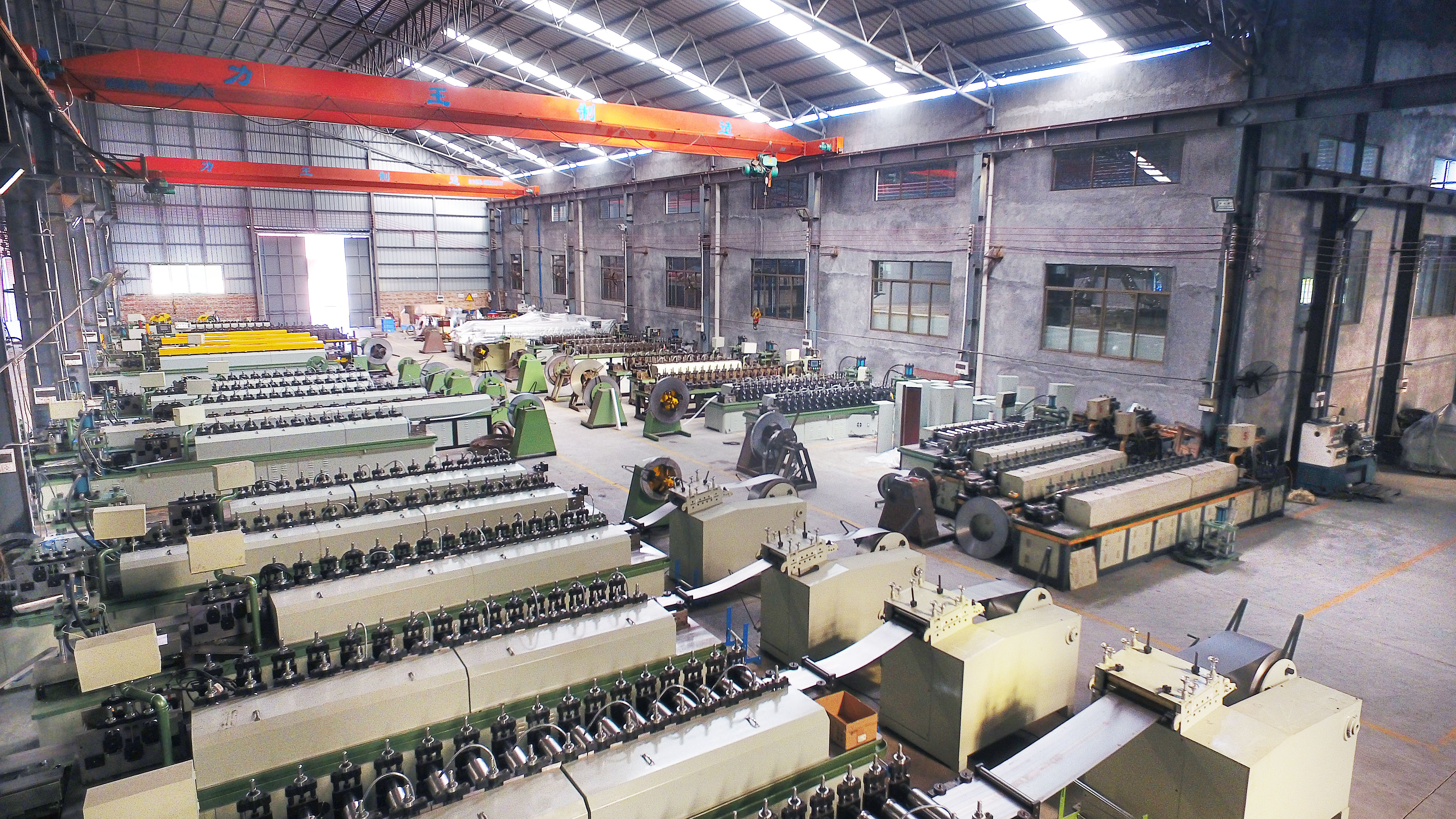
Next step: bring your own numbers to the comparison. Send your drawer slide profile drawing, material grade (carbon steel, GCr15 alloy steel or SKD11), strip thickness, target line speed and required tolerance, and LYB will respond with a configuration and a quotation. Minimum order quantity is 1 set, lead time 30–45 days.
Download the full technical brochure: LYB product brochure (PDF)
Website: www.fslybjx.com | Email: lianyoubang@126.com | WhatsApp: +8618028197495
Have Questions or Need More Details?
Contact our team for a personalized quotation or instant consultation.
Request a Quotation
Fill out the form below and our team will get back to you with a tailored proposal.
WhatsApp Direct Chat
Prefer to chat in real-time? Message us on WhatsApp for instant assistance & quick answers.
- Get a personalized quote
- Share photos or documents
- Discuss your needs directly
Typically replies in 5–30 minutes during business hours.