Standard vs. Custom Slide Forming Machines: A Buyer's Comparison for Drawer Rail Production
The short answer: a dedicated machine such as the LYB-SR400 Slide Rail Roll Forming Machine is the right starting point when your drawer rail profile and strip thickness already sit inside its documented working envelope. The LYB-Customized Series is the right starting point when the profile, the material mix, or the output target falls outside that envelope and has to be engineered. The rest of this comparison is about how to prove which of those two situations you are actually in — before you commit.
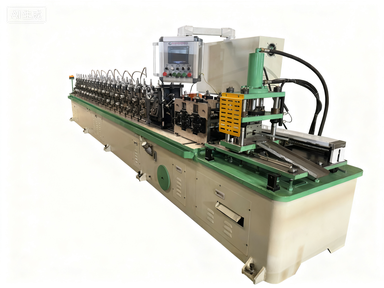
Roll forming equipment forms the steel strip that becomes a drawer slide; the machine choice is set by the profile, not by the catalogue photo.
Problem Definition: The Standard-or-Custom Decision Is Usually Made on Mismatched Evidence
Drawer rail producers rarely compare two machines on equal terms. One quotation usually arrives as a configured machine with a fixed specification sheet; the other arrives as an engineering proposal priced against a profile drawing that may not be final. Reading those two documents side by side produces a decision that looks analytical but is built on inputs that do not line up.
In practice, the choice is forced by one of three triggers:
- A new profile. You are adding a telescopic channel, a three-fold drawer slide, or a ball-bearing runner that no existing machine in your plant can form.
- A capacity step. The existing line is running at its limit and the question is whether to duplicate a known machine or upgrade the architecture.
- A material change. A customer asks for thinner strip, a different steel grade, or a coated surface, and the original machine envelope no longer covers it.
Two risks run in opposite directions. Over-specifying means paying for adjustment range, engineering time, and tooling complexity that production never uses. Under-specifying means buying a machine that is efficient today and closed to the next profile you sell. The cost of the second mistake is usually discovered only after a customer inquiry arrives that the line cannot answer.
The information problem is that the two models are published with different measurement conventions. The dedicated slide rail machine is described with a cutting accuracy figure; the customized series is described with a molding tolerance figure. Those are not the same measurement, and treating them as a single precision number is the most common comparison error in this category.
Industry Background: Where Forming Sits in Drawer Rail Manufacturing
A drawer slide is a roll formed steel profile, produced continuously from coil rather than in discrete press strokes. The same forming principle serves a broader family of pull-out hardware: drawer runners, table pull-outs, sliding-door runners, oven pull-outs, and stainless-steel pull-outs for dishwashers are all identified as roll forming applications by equipment makers serving the furniture industry.
The equipment market around this process is large and increasingly automated. Coherent Market Insights estimates the global roll forming machine market at USD 10.09 billion in 2026, and reports that the automatic roll forming machine segment is expected to hold a 46.8% market share in the same year. For a drawer rail buyer, the practical reading is straightforward: PLC-based control and servo-driven functions are the mainstream assumption in new equipment, not a premium add-on that needs justification.
Application coverage across the supplier landscape is also wider than the word "drawer slide" suggests. Suppliers describe equipment programmes covering standard, heavy-duty, multiple-stand hole-punch, two-fold ball-bearing, full-extension telescopic-channel, drawer-runner, steel-ball, server-rack, and hidden-slide types. A machine that forms one of these families well is not automatically suited to another, which is exactly why the standard-versus-custom question exists.
Finally, forming is one stage of a longer line. Foshan Lianyoubang Precision Machinery Co., Ltd. lists, alongside high-precision servo slide forming machines and heavy-duty slide forming machines, automatic and semi-automatic slide assembly machines, automatic rivet machines, automatic slide bending machines, automatic slide butt welding machines, bead pressing machines, slide rail testing machines, slide rail runout detectors, and assembly lines. Buyers who plan to add downstream automation later should confirm that the forming machine they choose can be integrated into that sequence rather than replaced by it.
The Two Options in Detail
Foshan Lianyoubang Precision Machinery Co., Ltd. is a Chinese manufacturer of high-precision cold roll forming equipment based in Foshan, Guangdong, producing cold roll forming machines, rolling shutter door machines, and slide rail production lines. For drawer rail production, its catalogue presents two distinct starting points.
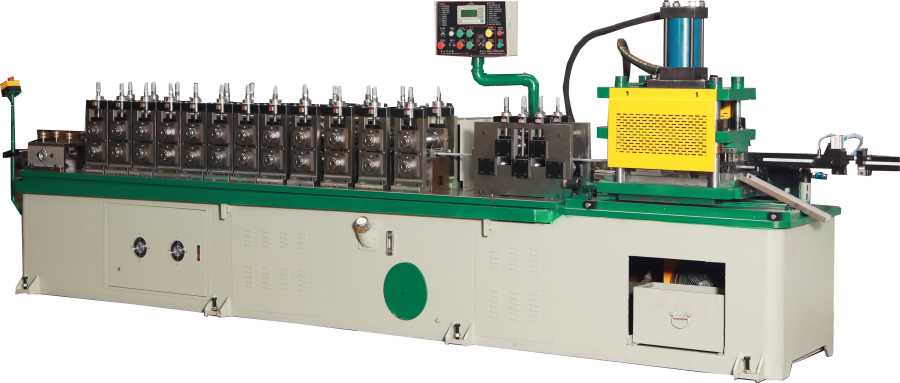
A slide rail forming machine is configured around the profile; the specification sheet defines the envelope that profile must fit inside.
LYB-SR400 — the dedicated slide rail machine
The LYB-SR400 is a cold roll forming machine classified as a Slide Rail Roll Forming Machine, designed for slide rail forming scenarios and intended for the furniture, home appliance, auto parts, and building materials industries. Its documented envelope is:
- Power range: 7.5–22 kW
- Line speed: 5–15 m/min
- Material thickness: 0.5–3.0 mm
- Maximum material width: 400 mm
- Control system: PLC + servo motor
- Cutting accuracy: ±0.5 mm
- Construction materials: carbon steel, GCr15 alloy steel, SKD11
In the documented furniture drawer slide application, the machine performs precision forming of furniture drawer slide rails under continuous operation of about 10 hours per day, in a normal-temperature, dry workshop environment, with high dimensional accuracy and smooth surface forming as the stated requirements. That application is paired with an uncoiler, a servo feeder, and a hydraulic cutting machine.
LYB-Customized Series — the engineered machine
The LYB-Customized Series is a precision metal profile roll forming equipment family built to a defined profile and production requirement rather than to a fixed catalogue configuration. Its documented envelope is:
- Power range: 5.5–37 kW
- Forming speed: 0–25 m/min
- Molding tolerance: ±0.05 mm
- Applicable sheet thickness: 0.3–3.0 mm
- Control system: PLC automatic control
- Operating environment: −10 °C to 45 °C
- Construction materials: heavy-duty carbon steel or alloy steel
- Applicable industries: building materials, metal profile processing, hardware manufacturing, construction engineering
The wider power and speed bands are the visible sign of a machine sized around a specific task. A customized machine can be specified at either end of that range; a range in a specification sheet is not a guarantee that every configuration delivers all of it at once.
Side-by-Side Comparison
| Comparison point | LYB-SR400 (dedicated) | LYB-Customized Series (engineered) |
|---|---|---|
| Machine positioning | Slide Rail Roll Forming Machine, cold roll forming | Precision metal profile roll forming equipment |
| Line speed / forming speed | 5–15 m/min | 0–25 m/min |
| Power range | 7.5–22 kW | 5.5–37 kW |
| Material thickness | 0.5–3.0 mm | 0.3–3.0 mm |
| Strip width | Maximum 400 mm | Defined by the engineered configuration |
| Control system | PLC + servo motor | PLC automatic control |
| Published accuracy metric | Cutting accuracy ±0.5 mm | Molding tolerance ±0.05 mm |
| Construction materials | Carbon steel, GCr15 alloy steel, SKD11 | Heavy-duty carbon steel or alloy steel |
| Documented industries | Furniture, home appliance, auto parts, building materials | Building materials, metal profile processing, hardware manufacturing, construction engineering |
| Profile scope | Slide rail and drawer slide forming scenarios | Set by the project profile drawing |
| Supporting equipment | Uncoiler, servo feeder, hydraulic cutting machine (documented drawer slide application) | Scoped during engineering, based on the same line logic |
| Typical trigger | Profile already proven, repeat production, standard drawer rail range | Profile outside the fixed envelope, mixed materials, or a line built around a target output |
Step-by-Step: How to Decide in Six Steps
- Fix the profile drawing before comparing prices. Section geometry, bend count, and hole pattern determine station count and tooling, and station count is the largest single driver of both machine cost and changeover complexity. A comparison run before the drawing is frozen compares assumptions, not machines.
- Test the thickness range against the envelope. The LYB-SR400 covers 0.5–3.0 mm; the LYB-Customized Series covers 0.3–3.0 mm. If your product range includes a 0.4 mm decorative or light-duty slide, the dedicated machine's documented envelope does not reach it. If your entire output is 1.0–2.0 mm furniture rail, the wider customized range buys nothing.
- Check strip width, not just thickness. The LYB-SR400 is documented with a maximum material width of 400 mm. Wide blanks for multi-part nesting or for wide telescopic channel sections must be confirmed against that limit before anything else is discussed.
- Match speed to the whole line, not to the machine. A forming machine running faster than the punching, assembly, or packing step simply builds work-in-progress. The documented furniture drawer slide application assumes continuous operation of about 10 hours per day, which is the right basis for calculating whether 5–15 m/min or the wider 0–25 m/min band is the useful target.
- Compare precision on the same metric. Decide in advance whether your acceptance criterion is cutting accuracy, molding tolerance, or a finished-assembly check such as runout. Then ask the supplier to state the value, the definition, and the test condition in writing for the specific machine being quoted.
- Scope the supporting equipment and the downstream steps. The documented drawer slide application pairs the forming machine with an uncoiler, a servo feeder, and a hydraulic cutting machine. If assembly, riveting, bending, or runout testing will follow, confirm now whether the forming machine will be integrated into a line or stand alone.
Reading the Numbers Correctly: Speed, Power, and Tolerance
Published specification ranges for slide forming equipment are not interchangeable benchmarks. Values for speed, thickness, tolerance, and width come from different supplier models and configurations, and the definitions behind them are not standardised across the industry. Two machines can both claim 15 m/min while measuring speed under different profile, steel grade, and punching scope.
Line speed is only meaningful together with the profile being formed, the steel grade and coating, the strip width, the number of forming passes, and whether punching and cutting are included in the cycle. A speed figure quoted without those conditions should be treated as an indication of machine capability, not a production promise.
Power range describes drive sizing across the model family, not output. A machine quoted at the low end of a 5.5–37 kW band and one quoted at 22 kW inside a 7.5–22 kW band may both suit a 1.5 mm furniture rail — what changes is how much forming work and how many stations the drive has to carry.
Tolerance is where the standard-versus-custom decision most often turns. The LYB-Customized Series is published with a molding tolerance of ±0.05 mm. The LYB-SR400 is published with a cutting accuracy of ±0.5 mm. If your customer's drawing tolerances only concern cut length, the cutting accuracy figure is the relevant one. If they concern the formed section itself, the molding tolerance figure is the relevant one. Confirm both for the machine you actually order.
One practical detail that belongs in the RFQ: numerically controlled roll forming machines for metal working are classified under HS code 8462.25.00 for international trade purposes. Getting the classification right at quotation stage avoids customs and duty surprises later, particularly for buyers importing into Southeast Asia and the Middle East.
Construction Materials: Carbon Steel, GCr15, and SKD11
The LYB-SR400 lists carbon steel, GCr15 alloy steel, and SKD11 among its construction materials. The LYB-Customized Series specifies heavy-duty carbon steel or alloy steel. The distinction matters because these are not interchangeable labels.
Carbon steel provides the structural mass of the frame and bases. GCr15 and SKD11 are tool steels commonly selected where wear resistance and dimensional stability under load are required — in practice, the areas that contact the strip and set the profile. For a buyer, the useful question is not which grade appears in the specification line, but which components are made from which grade. Ask for that breakdown in the quotation: it tells you where the supplier expects wear to occur and what a future spare-parts order will contain.
Material grade also interacts with what you feed the machine. Running abrasive or coated strip shortens the life of contact components, and heavy-duty or high-strength sections load the forming stations differently from light furniture rail. If your product mix spans both, say so at inquiry stage rather than after commissioning.
Use Cases: Which Buyer Profile Fits Which Machine
Furniture drawer slide production
This is the documented core application for the LYB-SR400: precision forming of furniture drawer slide rails, continuous operation of about 10 hours per day, with high dimensional accuracy and smooth surface forming as the stated requirements. The application is documented for markets including the Philippines, Pakistan, and Tanzania. A producer running a stable drawer rail range for furniture OEMs is the closest fit to the dedicated machine.
Appliance and special pull-outs
Oven pull-outs, dishwasher pull-outs, and stainless-steel variants widen the material and surface requirements well beyond standard furniture rail. Stainless and coated strip behave differently in forming, and surface marking becomes a quality issue rather than a cosmetic one. A customized configuration is the more natural starting point here.
Telescopic channels, ball-bearing slides, and heavy-duty rails
Full-extension telescopic channel, two-fold ball-bearing, steel-ball, server-rack, and hidden-slide types all exist in the market and each carries its own section geometry. Where the section departs from a proven drawer rail profile, engineering the machine around the drawing is safer than forcing the drawing into a fixed envelope.
Non-furniture profile work
The LYB-Customized Series is documented for building materials, metal profile processing, hardware manufacturing, and construction engineering, and for precision metal profile roll forming generally. A workshop that alternates between drawer rail contracts and other profiles needs the flexibility of the customized route, or a second dedicated machine — and that is a capacity decision, not a specification decision.
Decision Rules: Choosing Between the Two
Choose the LYB-SR400 when: your profile is a proven drawer slide or slide rail section; your strip thickness sits between 0.5 mm and 3.0 mm; your strip width stays within 400 mm; your target output is served by 5–15 m/min; and you want a PLC plus servo motor machine with a known configuration rather than an engineering project.
Choose the LYB-Customized Series when: any element of the profile falls outside that envelope; you need strip thinner than 0.5 mm or a forming speed band that extends to 0–25 m/min; you require a stated molding tolerance of ±0.05 mm as an acceptance criterion; you operate outside a normal workshop temperature range and need the −10 °C to 45 °C band; or your production mixes profile families and cannot be served by one fixed configuration.
Choose neither, yet, when: the profile drawing is not frozen, the material grade is undecided, or the downstream assembly and testing steps have not been scoped. In all three cases the honest answer is to complete the specification first, because a machine bought against an unfinished requirement cannot be evaluated against it later.
Frequently Asked Questions
What compliance requirements should be checked before ordering a drawer rail forming machine?
Separate the machine from the product. On the product side, telescopic ball-bearing drawer slides are under mandatory BIS certification as per IS 17954 in India, which means the slide you produce may be tested against a standard that your forming tolerance has to satisfy. On the machine side, ask the supplier to state in writing which conformity documentation applies to the exact configuration being quoted, for your destination market. Neither of the two Lianyoubang model specifications summarised in this article should be read as a conformity claim in itself.
Can the LYB-SR400 form my specific drawer slide profile, or do I need the customized series?
The LYB-SR400 is a slide rail roll forming machine built for slide rail forming scenarios, with a documented envelope of 0.5–3.0 mm material thickness, 400 mm maximum material width, 5–15 m/min line speed, 7.5–22 kW power range, PLC plus servo motor control, and ±0.5 mm cutting accuracy. If your section and strip dimensions fall inside that envelope, the dedicated machine is the simpler starting point. If any of them fall outside it — particularly thickness below 0.5 mm — the LYB-Customized Series, with its 0.3–3.0 mm thickness range, 0–25 m/min forming speed, 5.5–37 kW power range, and ±0.05 mm molding tolerance, is the appropriate route.
What drives the cost difference between a standard and a customized slide forming machine?
Neither model's price is published in the material reviewed here, and any figure quoted without a defined profile is an estimate rather than a price. In practice, cost is driven by the number of forming stations the section requires, the power band the drive has to sit in, the control architecture selected, the material grades used in strip-contact components, and whether the scope includes supporting equipment such as an uncoiler, a servo feeder, and a hydraulic cutting machine. The practical approach is to request both options priced against the same frozen profile drawing, so the comparison reflects scope rather than assumption.
How should we validate a machine before it ships?
Write the acceptance test around the figures that will actually be measured in production. For the LYB-SR400 that means confirming cut length against the ±0.5 mm cutting accuracy figure, forming the target section at the material thickness and strip width you will actually buy, and running at the line speed you intend to operate. For the LYB-Customized Series, confirm that the ±0.05 mm molding tolerance figure is measured on your profile, with your steel grade, under a stated test condition. Ask for the definition and measurement method in writing alongside the value — a tolerance without a test method cannot be accepted or rejected.
What delivery timeline should we plan for?
Foshan Lianyoubang operates a 10,000 m² manufacturing facility with approximately 30 staff and an annual production capacity of 120 units, and exports account for 30% of total sales across Southeast Asia, the Middle East, and the domestic market. No standard lead time is published for either model, and a customized configuration will in any case depend on drawing approval and tooling. Request a written delivery schedule with the quotation, and align it with your installation and commissioning window rather than with the purchase order date. To start that conversation, send your profile drawing and target output to lianyoubang@126.com or call +8618028197495.
Conclusion: Match the Machine to the Profile, Not to the Brochure
The LYB-SR400 and the LYB-Customized Series are not two quality tiers. They answer two different questions. The dedicated machine answers "can you produce this proven drawer rail section reliably, at a known speed, with PLC and servo control?" The customized series answers "can you engineer a machine around a section that does not yet have a machine?"
The decision sequence is therefore short: freeze the profile drawing, measure the section and strip against 0.5–3.0 mm thickness, 400 mm width, and the published speed and power bands, decide which precision metric your acceptance test will use, and scope the supporting equipment and downstream steps in the same conversation. Buyers who complete those four steps before requesting a price usually find that the standard-or-custom question answers itself — and that the machine they order is the one their next customer inquiry will still fit.
Next Step: Compare Both Options Against Your Own Drawing
Send your drawer slide or telescopic channel profile drawing, your strip thickness and steel grade, and your target daily output. Foshan Lianyoubang Precision Machinery Co., Ltd. will respond with the configuration that fits — LYB-SR400 where the envelope matches, LYB-Customized Series where it does not.
Email: lianyoubang@126.com | Phone / WhatsApp: +8618028197495 | Website: www.fslybjx.com
Download the full product catalogue and specification brochure: Foshan Lianyoubang product brochure (PDF)
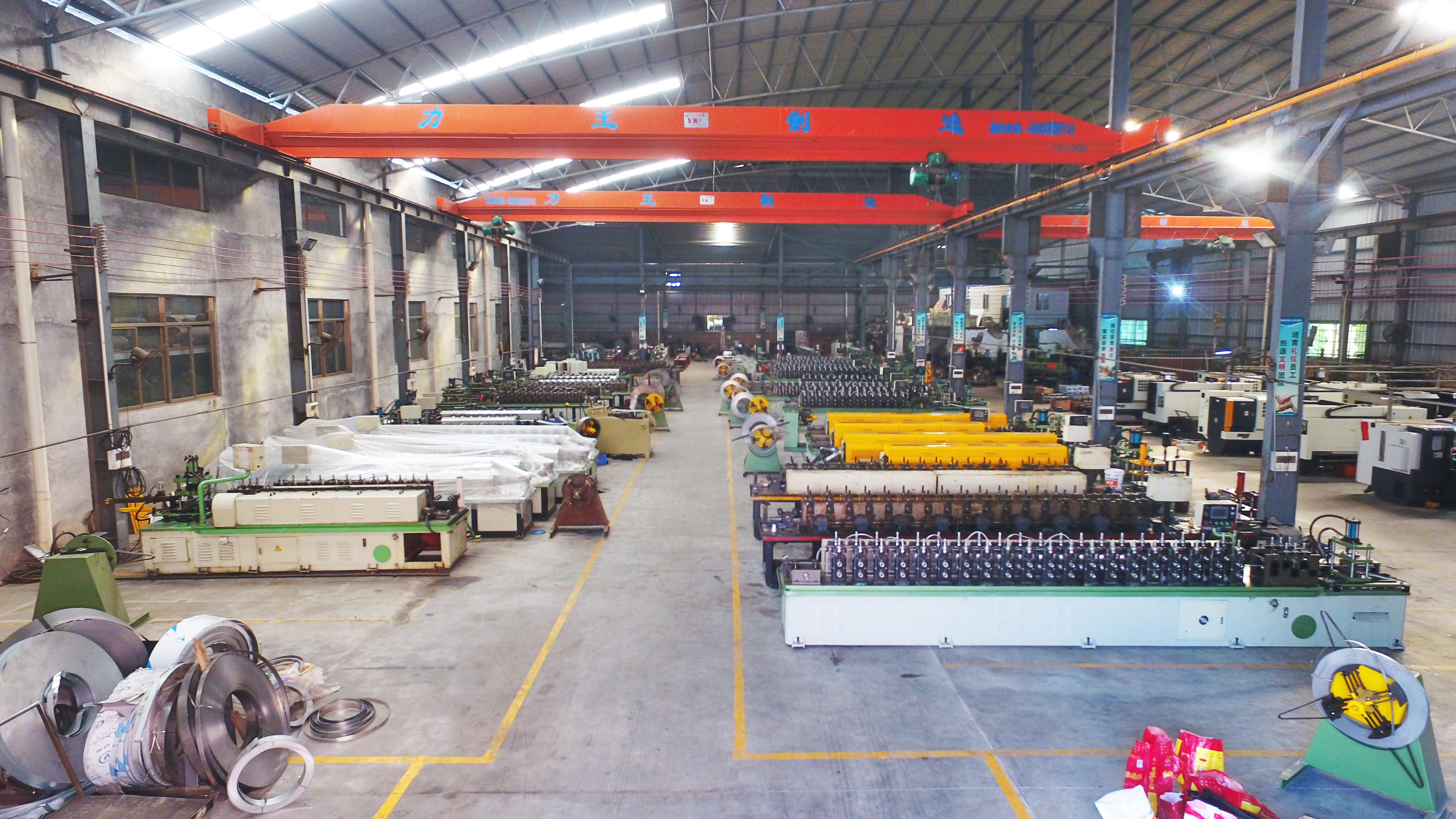
Shipping workshop, Foshan Lianyoubang Precision Machinery Co., Ltd., Foshan, Guangdong, China.
Have Questions or Need More Details?
Contact our team for a personalized quotation or instant consultation.
Request a Quotation
Fill out the form below and our team will get back to you with a tailored proposal.
WhatsApp Direct Chat
Prefer to chat in real-time? Message us on WhatsApp for instant assistance & quick answers.
- Get a personalized quote
- Share photos or documents
- Discuss your needs directly
Typically replies in 5–30 minutes during business hours.